News
131 entries in total
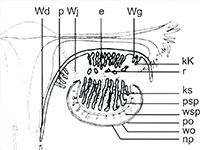
Hamartoma of the Gärtnera duct of the labia minora
Hamartoma -- a very rare lesion that is a splintering of mature cells of the organogenesis period, abnormally juxtaposed, and in this case displaced within the vulva.
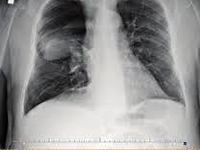
Iatrogenic foreign bodies in the abdominal cavity - medical and legal problems
Iatrogenic foreign bodies in a patient are usually materials or instruments used during medical procedures, left in body cavities or internal organs. Leaving such iatrogenic foreign bodies can happen during virtually any procedure and in any medical specialty. Most often such cases occur in surgery during abdominal operations. But they can also happen in gynecology, ENT, neurosurgery and even dentistry (such as leaving a fragment of a broken drill in the root canal of a tooth). Such cases pose numerous problems for clinicians, but also for forensic medics. The goal of clinicians is to diagnose the existence of a foreign body in the patient's body and remove it as soon as possible. Forensic medics, when ordered by the Court or the Prosecutor's Office, evaluate the correctness of the medical procedure (the possibility of a medical error) and establish causal relationships between the doctors' actions and the patient's health damage. The case of a young woman is presented, in whom an iatrogenic foreign body was revealed in the abdominal cavity after a cesarean section procedure after 8 months. The purpose of forensic medical analyses was, among other things, to determine the route and time of entry of this foreign body to the site where it was found.
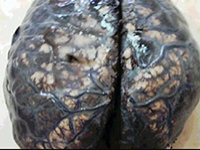
Narcolepsy in a 37-year-old woman
We present the case of a 37-year-old woman who was brought to the Neurology Clinic of the Medical University with symptoms of narcolepsy. The final diagnosis was made on the basis of cytological examination of the cerebrospinal fluid based on immunohistochemistry. After a 3-month stay in the clinic, the patient died. The previously made cytological diagnosis was confirmed by autopsy and histopathological examination.

From the casuistry of unusual matters of determining the controversial paternity
The paper discusses the legal, medical, organizational and social issues related to the establishment of disputed paternity. It also discusses the history and outlines the future development of this application of genetic. Special emphasis was placed on ethical issues.
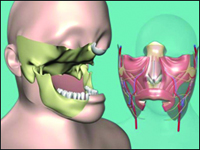
Face transplantation: challenges for the surgeon
In the last 20 years we have developed experimental models of complex allogenic transplantations such as that of limb, face or abdominal wali. In the same time we were cond ucting research on new protocols regarding minimal immunosupression and tolerance in Lransplantology. As a preparation for implementation of those transplants in clinical procedures as a treatment for patients with extensive injuries to the facia! skeleton we havc conductcd a scrics of anatomical simulations imitating a clinical face transplant. In 2004, after o btaining the necessary legal permissions ancl consent from the et hic.al committees, we have created in the Cleveland Glinie, the first program in the world of face transplantation in humans. The result of many years of preparations was a first, almost complete face transplant in the United States in December 2008.
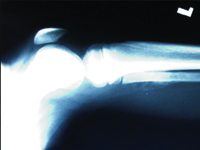
An unusual talent that appeared in Piotr Miszczyk treated for malignant sarcoma

When to progress, and when to "unexplained" healings
Development and progress are associated with hard, usually teamwork. They rarely occur as a result of individual efforts of the mind, and even more rarely as a result of chance. Since the dawn of human history, there have been events that could not be explained at the time. We cannot explain them today either. They concerned phenomena in nature. Most often, however, inexplicable events occur in people's lives.
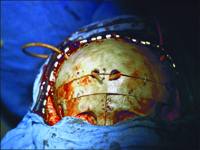
Cranio-facial clefts
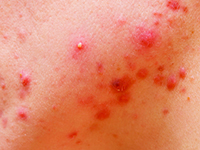
Vaso-meningeal syphilis in an HIV-infected patient