News
131 entries in total

Pregnant woman with severe anemia
Anemia is a very common disease. The most common symptoms, such as weakness, headaches, dizziness, impaired concentration and pallor, are nonspecific. The most common causes of anemia in pregnant women are deficiencies of iron, folic acid and vitamin B12. Anemia can be a complication of other diseases such as kidney failure or hyperparathyroidism.

19-year-old primipara with placenta increta - case report
Adherent placenta (placenta accreta) is the result of pathological implantation of the trophoblast deep into the temporum. This condition is rare in obstetrics, but no less dangerous to the health and life of the parturient. Risk factors for innate placenta are: previous uterine surgery, placenta previa, maternal age over 35, endometrial damage, submucosal myomas. The pathogenesis is unknown, and the diagnostic and treatment management remains an important clinical problem.

Carcinoid tumour of the appendix treated with right hemicolectomy: a case report
Appendiceal carcinomas are malignant tumors - mostly diagnosed incidentally in patients undergoing appendectomy for other reasons, and due to their small size, preoperative diagnosis is mostly impossible. Carcinomas can cause acute appendicitis due to obstruction of the appendiceal lumen.

Disregarding mother in DNA paternity testing may be misleading
Investigation of disputed paternity using molecular techniques is now increasingly used by the justice system. Unfortunately, it is common to find that some laboratories use poor practices - the most common being the omission of testing the mother's genetic profile.

Thoracic duct injury as a thyroid surgery complication
We present the case of a 32-year-old female patient admitted to the Third Department of General Surgery in Krakow for thyroidectomy due to papillary thyroid carcinoma. The patient underwent a total thyroidectomy with removal of the lymph nodes of the central compartment of the neck without any intraoperative complications. On the first day after surgery, 300 ml of milky fluid was observed in the right drain. Due to persistent lymphadenopathy, oral feeding was stopped and total parenteral nutrition was started. Drainage volumes observed on subsequent days varied between 580 and 50 ml with a decreasing trend. The drains were removed on the 13th postoperative day with no sign of lymphothorax.
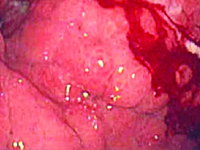
Advanced stomach cancer surgery with complications
In terms of the incidence of malignant neoplasms in Poland, gastric cancer is ranked 5th in men and 9th in women. Poland is one of the countries with an average incidence rate, however, nearly 90\% of cases are diagnosed at an advanced stage, which is due, among other things, to the uncharacteristic symptomatology resembling other stomach conditions - peptic ulcer disease or gastritis. In Poland, early gastric cancer is diagnosed in only 4.5-7% of cases. The 5-year survival rate for all stages is about 10-25\%, with a survival rate of nearly 90\% in early cancer. Among the malignancies found in the stomach, 95\% are adenocarcinomas - adenocarcinomas, while the remaining 5% are lymphomas, sarcomas, carcinomas and stromal tumors.

Socio-ethical aspects of upper limb transplantation
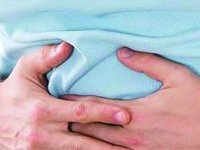
Intestinal tract obstruction caused by an inflammatory tumor in the course of tuberculosis
Gastrointestinal tuberculosis was common in the period before the introduction of effective anti-tuberculosis treatment. It occurred in 1/4 of patients with advanced pulmonary tuberculosis. It is now rare in developed countries. In the gastrointestinal tract, intestinal tuberculosis manifests as infiltrates and ulcerations in the intestinal wall, most often in the cecum region. Among the symptoms of intestinal tuberculosis are severe abdominal pain, bloating, constipation, fever, diarrhea, painful stool pushing, pain on defecation. In some cases, there may be obstruction of the gastrointestinal tract due to inflammatory tuberculous tumor.
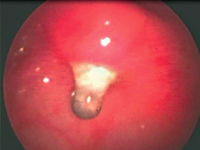
Foreign body in the esophagus and stomach -- atypical clinical course
Presentation of an unusual clinical course in the case of a 3.5-year-old child who swallowed a foreign body in the form of several small magnets.
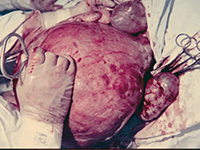
A rare case of giant uterine myoma
Uterine myomas (myomata uteri) are benign tumors, the most common. They account for about 15% of all tumors of a woman's reproductive organs. Histologically, they are tumors composed of connective tissue elements and smooth muscle fibers (fibromata, myomata, fibromyomata). The present case is special because of the rare type of giant myoma of the uterus.