Skip to content
Peer-Reviewed · Open Access

Clinical Case Reports for the Evidence-Based Era

MedCaseReports.com — formerly PrzypadkiMedyczne.pl. Educationally important, diagnostically and therapeutically challenging cases from clinical practice.

14,161
Registered users
459
Contributing authors
5
MNiSW points
627
Clinical quizzes & tests
e-ISSN 2084-2708p-ISSN 2083-0033Indexed Google Scholar · PBNLicense CC BY-NC-SA 4.0

Case reports portfolio

Peer-reviewed clinical case reports

№ 14Internal MedicineCase ReportOpen Access
Narcolepsy in a  37-year-old woman

Narcolepsy in a 37-year-old woman

We present the case of a 37-year-old woman who was brought to the Neurology Clinic of the Medical University with symptoms of narcolepsy. The final diagnosis was made on the basis of cytological examination of the cerebrospinal fluid based on immunohistochemistry. After a 3-month stay in the clinic, the patient died. The previously made cytological diagnosis was confirmed by autopsy and histopathological examination.

Received 24 Mar 2011Accepted 24 Mar 2011Published 24 Mar 2011
JM
Jeleń M.24 Mar 2011
№ 13OtherCase ReportOpen Access
Iatrogenic foreign bodies in the abdominal cavity - medical and legal problems

Iatrogenic foreign bodies in the abdominal cavity - medical and legal problems

Iatrogenic foreign bodies in a patient are usually materials or instruments used during medical procedures, left in body cavities or internal organs. Leaving such iatrogenic foreign bodies can happen during virtually any procedure and in any medical specialty. Most often such cases occur in surgery during abdominal operations. But they can also happen in gynecology, ENT, neurosurgery and even dentistry (such as leaving a fragment of a broken drill in the root canal of a tooth). Such cases pose numerous problems for clinicians, but also for forensic medics. The goal of clinicians is to diagnose the existence of a foreign body in the patient's body and remove it as soon as possible. Forensic medics, when ordered by the Court or the Prosecutor's Office, evaluate the correctness of the medical procedure (the possibility of a medical error) and establish causal relationships between the doctors' actions and the patient's health damage. The case of a young woman is presented, in whom an iatrogenic foreign body was revealed in the abdominal cavity after a cesarean section procedure after 8 months. The purpose of forensic medical analyses was, among other things, to determine the route and time of entry of this foreign body to the site where it was found.

Received 24 Mar 2011Published 24 Mar 2011
TJ
Trnka J.24 Mar 2011
№ 12Internal MedicineCase ReportOpen Access
Hamartoma of the Gärtnera duct of the labia minora

Hamartoma of the Gärtnera duct of the labia minora

Hamartoma -- a very rare lesion that is a splintering of mature cells of the organogenesis period, abnormally juxtaposed, and in this case displaced within the vulva.

Received 24 Mar 2011Accepted 24 Mar 2011Published 24 Mar 2011
UM
Ujec M., Rzucidło Z., Karmowski A.24 Mar 2011
№ 11Internal MedicineCase ReportOpen Access
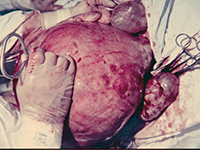
A rare case of giant uterine myoma

A rare case of giant uterine myoma

Uterine myomas (myomata uteri) are benign tumors, the most common. They account for about 15% of all tumors of a woman's reproductive organs. Histologically, they are tumors composed of connective tissue elements and smooth muscle fibers (fibromata, myomata, fibromyomata). The present case is special because of the rare type of giant myoma of the uterus.

Received 24 Mar 2011Accepted 24 Mar 2011Published 24 Mar 2011
NK
Nowosad K., Karmowski A., Scheller J.24 Mar 2011
№ 10SurgeryCase ReportOpen Access
Advanced stomach cancer surgery with complications

Advanced stomach cancer surgery with complications

In terms of the incidence of malignant neoplasms in Poland, gastric cancer is ranked 5th in men and 9th in women. Poland is one of the countries with an average incidence rate, however, nearly 90\% of cases are diagnosed at an advanced stage, which is due, among other things, to the uncharacteristic symptomatology resembling other stomach conditions - peptic ulcer disease or gastritis. In Poland, early gastric cancer is diagnosed in only 4.5-7% of cases. The 5-year survival rate for all stages is about 10-25\%, with a survival rate of nearly 90\% in early cancer. Among the malignancies found in the stomach, 95\% are adenocarcinomas - adenocarcinomas, while the remaining 5% are lymphomas, sarcomas, carcinomas and stromal tumors.

Received 20 Feb 2011Accepted 21 Feb 2012Published 03 Mar 2012
KW
Kielan W., Grzebieniak Z., Kurkiewicz E.03 Mar 2012

Educational Hub

Quizzes, tests, conferences, LEK-endium — clinical education in every format.

Sign in to earn MCR points on every quiz and test you complete.

Sign in →