Skip to content
Peer-Reviewed · Open Access

Clinical Case Reports for the Evidence-Based Era

MedCaseReports.com — formerly PrzypadkiMedyczne.pl. Educationally important, diagnostically and therapeutically challenging cases from clinical practice.

14,161
Registered users
459
Contributing authors
5
MNiSW points
627
Clinical quizzes & tests
e-ISSN 2084-2708p-ISSN 2083-0033Indexed Google Scholar · PBNLicense CC BY-NC-SA 4.0

Case reports portfolio

Peer-reviewed clinical case reports

№ 114Internal MedicineCase ReportOpen Access
Thermosemiotics of chronic tonsillitis

Thermosemiotics of chronic tonsillitis

Research Objective – to develop thermosemiotics of chronic tonsillitis by determining specifics of infrared waves in the submandibular region and on the palms, knees and in the center of foot vault in healthy people and comparison of the obtained results with the corresponding indices of patients with chronic tonsillitis. Most common pathogens in infectious tonsillitis are Streptococcus spp. Tonsillitis infrequently develops on the background of acute respiratory disease, but usually manifests itself as a separate disease. Suppression of local immune response on cold exposure, malnutrition, physical exhaustion, blockage of nasal pathways by adenoid tissue, chronic sinusitis, deviation of the nasal septum, chronic rhinitis are favorable set ssup for tonsillitis formation [1-3]. In clinical practice, it is often necessary to distinguish acute tonsillitis from chronic, because they are fundamentally different diseases. Recurrent acute tonsillitis that is frequently undertreated is commonly seen as preceding factor in development of chronic tonsillitis. Follicular form of tonsillitis is considered most unfavorable as it leads to scar formation in lymphoid tissue therefore diminishing its protective properties. Tonsillolith are formed consisting of desquamated epithelium, microbes, inflammatory exudate. They are difficult to evacuate and causing lacunar expansion, formation of retention cysts [4, 5]. Tonsilitis is notorious for its complications, such as myocarditis, rheumatic diseases, nephritis. Exacerbation may occur on the background of chronic inflammatory process. Therefore, special attention needs to be directed to patient reported history, particularly frequency and duration of exacerbations. Exacerbation of chronic tonsillitis is accompanied by symptoms of general intoxication – subfebrile temperature, pain in joints, decreased tolerance to physical exertion, fatigue. The tonsils, as a rule, are enlarged, have submucosal purulent follicles (however, in the absence of signs of acute tonsillitis, hyperemia and inflammatory infiltration may be present), caseosus-purulent masses in cicatricial lacunae. Regional lymph nodes are enlarged, dense, sometimes painful. Tonsil-cardial syndrome is often observed with subjective sensations of pain in the region of the heart, heart intermission, palpitation. There may be vasomotor symptoms – pallor or hyperemia of the skin, xerodermia or increase perspiration functional heart murmurs, myocarditis [4].Research Objective – to develop thermosemiotics of chronic tonsillitis by determining specifics of infrared waves in the submandibular region, on the palms, in the projection of kneecaps, and in the center of foot vault both in patients with chronic tonsillitis and healthy persons.
Received 04 Jul 2019Accepted 25 Aug 2019Published 28 Aug 2019
AM
Andreychyn M., Kopcha V., Andreichyn I.28 Aug 2019
№ 113SurgeryCase ReportOpen Access
Can the etiology of acute pancreatitis always be identified? A rare case of acute pancreatitis in a patient with primary erythromelalgia

Can the etiology of acute pancreatitis always be identified? A rare case of acute pancreatitis in a patient with primary erythromelalgia

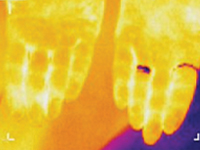
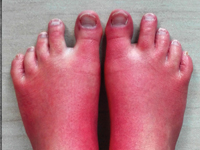
APD is the most common pancreatic disease and also a quite frequent cause of hospitalization of patients presenting to the hospital for due to abdominal pain. There has been an increasing incidence in recent years in developed countries and mortality in this disease reaching 5%. [1, 2]. Accurate diagnostics should make it possible to determine the etiology of UTI in more than 96% of cases [3] this, however, is still not achieved in many patients this is not achieved. Thus, relapse may occur with reoccurrence of a previously unrecognized etiologic factor. Many authors raise the role of drugs as a potential causative factor of ICS of unclear etiology[4]. There is no strictly defined regimen for effective yet safe treatment of pain in ICS. To date, it has not been established to what extent the drugs used for pain relief in this disease may simultaneously be a causative factor in pancreatitis[5, 6]. Primary erythromelalgia (EM), is a rare, genetically determined disease manifested by pain in the extremities, their increased heat and redness [7] [Image 1 - Painful erythema of the extremities lower extremities is the most common symptom in patients with Primary Erythromelalgia]. Treatment pharmacological treatment of this disease is not always effective. Various physical and invasive methods, including neurolysis of the lumbar segment of the sympathetic trunk sympathetic trunk [8]. This causes patients with EM often overuse pain medications, some of which are also used in the symptomatic treatment of pain in EM. We present the case of a 25- year-old EM patient who developed symptoms of ICS 10 days after unsuccessful pharmacological neurolysis of the lumbar sympathetic trunk and was preceded by the use of several analgesics, later also used in the treatment of during treatment of pancreatitis. Despite thorough diagnostics, it was not possible to determine the cause of the OST

Received 21 Jan 2019Accepted 13 Jul 2019Published 24 Aug 2019
W
Wysocki Ł., Romanik W., Nurowska-Wrzosek B.24 Aug 2019
№ 112SurgeryCase ReportOpen Access
Patient with multivessel coronary artery disease and end-stage renal disease treated with multiple percutaneous coronary interventions.

Patient with multivessel coronary artery disease and end-stage renal disease treated with multiple percutaneous coronary interventions.

End-stage renal failure (SNN) is a growing problem in developed countries [1]. Although diabetes remains the most common cause of dysfunction of these organs [2], chronic nephropathy can also be caused by autoimmune diseases, particularly from the vasculitis group. In the United States, the number of patients with SNN requiring dialysis therapy already reaches nearly 500,000, and more than 200,000 are living with an active kidney transplant [3]. Chronic kidney disease (CHD) is a significant cardiovascular problem, contributing to the rapid development of coronary artery disease coronary artery disease, especially the multivessel form. The more severe course of coronary artery disease coronary artery disease in patients with PChN is influenced by impaired calcium metabolism and a tendency to diffuse arterial calcification [4]. Patients with PChN and high CRP levels are at particularly high risk of cardiovascular incidents [5,6]. Currently, there are no guidelines for the surgical treatment of coronary artery disease in patients with PChN. However, they have a higher risk of death after revascularization than in the population without PChN [7]. Opinions on the effectiveness of of using percutaneous coronary intervention (PCI) and coronary artery bypass grafting (CABG) are divided, and there are no conclusive data in this regard. There are also no recommendations suggesting the development of a long-term strategy for treating coronary artery disease in patients with SNN, although it has been it has been described that they require multiple repeat PCI (if this method is chosen method) [8].

Received 23 May 2018Accepted 28 Feb 2019Published 12 Mar 2019
RW
Rygier W., Kunikowski R., Ciurzyński M.12 Mar 2019
№ 111GynecologyCase ReportOpen Access
Sigmoid volvulus in an adolescent male patient

Sigmoid volvulus in an adolescent male patient

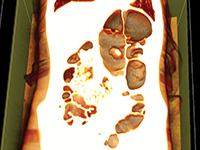
Sigmoid volvulus (SV) is a condition where sigmoid colon twists or torsions about its mesentery. This disorder is rare in infants and children[1]. It usually occurs in adults, after the age of 40, more commonly in males[2]. SV leads to intestinal obstruction, which is often acute in children, whereas in adults it may be subacute or progressive. As a result of intestinal obstruction, the most common symptoms include abdominal pain, distention, vomiting and, in chronic cases, constipation. In Europe, Australia and the United States, the incidence of SV is very low. Nevertheless, SV remains the leading cause of acute colon obstruction in developing countries[3]. The diagnosis is based on clinical and radiological findings and is more difficult to establish in children compared to adults[4], and a correct diagnosis can be easily missed or delayed[4]. We present a case report with exceptional quality CT images and 3D reconstructions.

Received 11 Sept 2018Accepted 28 Jan 2019
AS
Anzelewicz S., Łosin M., Gołębiewski A.
№ 110GynecologyCase ReportOpen Access
Migration of a Kirschner wire used in fixation of acromioclavicular joint dislocation – case report.

Migration of a Kirschner wire used in fixation of acromioclavicular joint dislocation – case report.

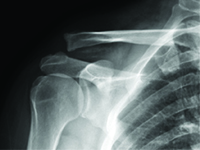
Dislocation of the acromioclavicular joint refers to complete or partial misalignment of the articular surfaces of the neighbouring scapula and clavicle [1]. It is an injury which often occurs in contact sports, such as football, judo, rugby and many more. It is also a relatively common injury in daily activities, as a result of falling during a walk or falling off a chair with impact on the shoulder girdle [2], [3].<br />Depending on the grade of the injury, recommended approaches vary from conservative treatment (grade I and II) to surgical treatment (above grade III).<br />Conservative treatment recommendations are: cooling, painkillers and limb elevation. Surgical treatment consists of surgical stabilisation of the dislocation. There are many techniques and methods to fixate the injury, including: Kirschner wires, using TightRope, double Endobutton, MINAR, Copeland and Kessel, Waver and Dunn or dedicated plates [3], [4].<br />

Received 16 May 2017Accepted 16 Dec 2018Published 18 Dec 2018
SM
Stolarz M., Wasilewski J., Wrzask G.18 Dec 2018

Educational Hub

Quizzes, tests, conferences, LEK-endium — clinical education in every format.

Sign in to earn MCR points on every quiz and test you complete.

Sign in →