Skip to content
Peer-Reviewed · Open Access

Clinical Case Reports for the Evidence-Based Era

MedCaseReports.com — formerly PrzypadkiMedyczne.pl. Educationally important, diagnostically and therapeutically challenging cases from clinical practice.

14,161
Registered users
459
Contributing authors
5
MNiSW points
627
Clinical quizzes & tests
e-ISSN 2084-2708p-ISSN 2083-0033Indexed Google Scholar · PBNLicense CC BY-NC-SA 4.0

Case reports portfolio

Peer-reviewed clinical case reports

№ 119GynecologyCase ReportOpen Access
Example
of management of metatarsal bone II tumor originally suspected of
having metastatic thyroid follicular cancer 40 and 20 years after
total thyroidectomy

Example of management of metatarsal bone II tumor originally suspected of having metastatic thyroid follicular cancer 40 and 20 years after total thyroidectomy

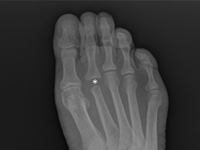
Known There are many causes causing discomfort and nodular lesions in the metatarsal area and forefoot. They include These include traumatic soft tissue injuries i bones (e.g., sole plate tears, toe arthritis, arthritis, fractures fatigue, Freiberg fracture), tendon diseases (e.g. tendinosis, tendon sheath inflammation, tendon rupture), non-cancerous soft tissue lesions (e.g., ganglion, bursitis bursitis, granuloma, Morton's neuroma), and, less commonly, tumors and their metastases to soft tissues and bone [1]. Focal bone lesions are often an incidental result of imaging. Alternatively, they may be the cause of pain, a palpable mass or a fracture pathological [2].Most often patients associate these symptoms with trauma. In fact, trauma only draws attention to the the affected area, but does not cause the formation of a tumor. [5] In all these cases, especially in the early stages, accurate diagnosis is crucial, to establish further differential diagnosis and treatment strategy, so when confronted with a focal bone lesion, it is necessary to follow a logical management algorithm. First, it should provide description of the lesion in correlation with the patient's age, location, type of bone, cortical involvement, periosteal reactions, the condition of the adjacent soft tissue. W this for this purpose, it is necessary to x-ray of the involved area in two projections with adjacent joints. A deeper diagnosis is achieved by CT examination, assessing the advancement of the bone lesions and MRI, infiltrating adjacent soft tissues . If imaging studies show more advanced disease, an important diagnostic element is to obtain material for pathomorphology, taken during open biopsy or oligobiopsy, and establish the histological diagnosis [11]. W case of confirmation of a neoplastic process, it is always necessary to perform a examination X-RAY/CT chest, ultrasound/ CT of the abdomen, or even PET to exclude metastases [5]. The second step of the implemented algorithm dictates that treatment should be planned based on the answers to the following questions: - Is the lesion likely to be a normal variant, That is, "leave me alone, don't touch me," a lesion of a benign type, requiring no further imaging or supplies, but only observation? [3] - Does the lesion have features suggestive of an aggressive nature, and then whether further imaging is necessary, which technique best to use, whether a biopsy of the lesion is required and advanced treatment? [4]. Heterogeneity clinical picture of unidentified focal nodular lesions w metatarsal and forefoot, the variety of available methods of diagnosis do not make the task any easier, both at the stage of making the initial diagnosis, as well as during communication between members of the interdisciplinary team, which many times should deal with address treatment. The purpose of of this article is to present a similar situation using the case of a tumor of the distal epiphysis of the second metatarsal bone as an example, suspected of late, distant metastasis of thyroid cancer, never not confirmed in further studies, and suggestions for management diagnostic and therapeutic management. Cancer Follicular The thyroid gland (FTC - Follicular Thyroid Carcinoma) accounts for 10-20% of of all cancers of the thyroid gland. It is the second most common encountered thyroid cancer [6], and metastasis to the metatarsal bones and fingers are extremely rare.
Received 24 Nov 2019Accepted 25 Jul 2021Published 26 Jul 2021
SP
Szkolnicki P.26 Jul 2021
№ 118Internal MedicineCase ReportOpen Access
Radical conformal radiotherapy in treatment of recurrent, extramammary Paget disease - case report.

Radical conformal radiotherapy in treatment of recurrent, extramammary Paget disease - case report.

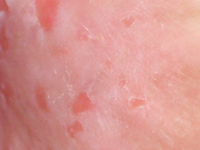
Disease Paget's disease is a rare neoplastic process originating in the glands of the apocrine and eccrine glands of the skin [1]. A distinction is made between the mammary Paget disease (MPD) form and the extramammary Paget disease (EMPD), accounting for 90% and 10% of all cases, respectively Paget disease [2]. The incidence of EMPD in the European population is estimated to be is estimated at 0.7 per 100,000 people/year [3]. EMPD is more often diagnosed in women, particularly Caucasian, between the ages of 50 and 80. [4], in whom it mostly localizes on the vulva and perineum and in the perianal area, while in men on the penis and scrotal sac [5,6]. The symptoms of the disease are uncharacteristic, which in most cases makes it difficult to make a correct diagnosis and thus prolongs the time to start treatment. Only histopathologic examination of the excised lesion allows a correct diagnosis and an assessment of the degree of invasiveness of the process [6]. The primary method of treatment remains radical surgery [7]. Due to the high recurrence rate [4,8], some patients require follow-up treatment [6]. In cases ineligible for surgery, local or systemic chemotherapy or radiation therapy is used [9,10].Given the very rare occurrence of the disease, the lack of established treatment regimens, observed failures and subsequent attempts at surgical intervention, the case presented here is an example of the possibility of treating EMPD with ionizing radiation.

Received 18 Jan 2020Accepted 05 Jan 2021Published 08 Jan 2021
RK
Reszka K., Pawlak M., Moskal Ł.08 Jan 2021
№ 117Internal MedicineCase ReportOpen Access
When your patient sleeps too much, disturbance of consciousness in the case of a geriatric patient – case report

When your patient sleeps too much, disturbance of consciousness in the case of a geriatric patient – case report

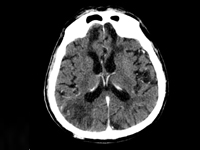
In The world, including Poland, has seen a systematic increase in the share of the general population of elderly people. The aging of the population and the associated increase in the number of geriatric patients now represents another of the challenges to be met by 21st century medicine. Patient A geriatric patient, as defined by the WHO (World Health Organization Organization), is a patient who has reached at least 60 years of age. The person under study is usually accompanied by a significant amount of illness, which is typical of old age and coexists with the risk of sudden deterioration of health or death [1]. In line with the need, a number of solutions are being implemented around the world, leading to the to improve the branch of medicine that is geriatrics. Comprehensive assessment geriatric assessment (Comprehensive geriatrc assessment, CGA) is a tool that consists of a set of scales and tests that allow a holistic assessment of patients facilitating the detection of the cause of deterioration and the selection of optimal therapy. A complete patient assessment, depending on the patient's clinical condition, takes between 30 to 60 minutes [2]. Comorbidities and medications taken by geriatric patients geriatric patients often require significant modification of generally accepted standards of treatment. A large number of emergencies in elderly patients proceed with disturbances of consciousness. Difficulties in correctly perceiving the of the surrounding world that patients encounter greatly complicate the the ability to accurately take a medical history, as well as conduct a physical examination and implement appropriate diagnostic and therapeutic measures.

Received 10 Sept 2020Accepted 28 Oct 2020Published 29 Oct 2020
WS
Wiśniewski S., Antos M.29 Oct 2020
№ 116SurgeryCase ReportOpen Access
Possibilities of systemic treatment in patients with NSCLC after organ transplantation - case report and literature review

Possibilities of systemic treatment in patients with NSCLC after organ transplantation - case report and literature review

The introduction of antibiotics, mass vaccinations to prevent infectious diseases and organ transplants can be considered the greatest achievements of 20th century medicine. Solid organ transplants save the lives of patients suffering from organ failure and improve their quality of life. The life expectancy of transplant patients has improved significantly over the past two decades. Successful transplantation improves survival in patients on chronic dialysis and in patients with irreversible liver, heart and lung disease and end-stage failure of these organs. The percentage of transplants performed is steadily increasing, but is still insufficient [1]. According to data reported to the Global Observatory on Donation and Transplantation (GODT), 106,879 organ transplants were performed in 95 countries worldwide in 2010, including:73,179 kidney transplants (46% from living donors), 21,602 liver transplants (15% from living donors), 5582 heart transplants, 3927 lung transplants, 2362 pancreas transplants and 227 small bowel transplants. This activity increased by 2.12% compared to 2009 [2].Unfortunately, it is estimated that the number of transplants performed is insufficient. At the same time, there are huge geographic differences in the number of transplants per million population: from 70 per million population in developed countries to 0-2.4 in developing countries [3]. As transplantation prolongs patients' lives, cancers are becoming an increasing threat to long-term survival, especially in patients who have undergone liver transplantation for hepatocellular carcinoma (HCC)[4].The risk of cancer in transplant patients is higher than in the general population. This is due to three reasons. Immunosuppressive treatment accompanying organ transplantation causes a decline in immunity, which can promote infection with oncogenic viruses such as humanpapillomavirus (HPV) or humanherpesvirustype 8 (HHV-8), and can allow emerging cancer cells to escape from weakened immune surveillance. In addition, immunosuppressive drugs have a cytotoxic effect, which can induce the formation of mutations and the transformation of normal cells into cancer cells. Therefore, patients undergoing organ transplantation most often develop hemato-oncologic malignancies, cancers associated with infection with potentially oncogenic viruses: Kaposi's sarcoma (infection with human herpes viruses), cervical cancer and squamous cell carcinomas of the head and neck region (infection with human papillomavirus), liver cancer (infection with hepatitis B and C viruses) and skin cancers. Lung cancer, cancers of the gastrointestinal tract or urinary tract occur in no more than 1% of transplant recipients. The feasibility of using systemic cancer treatment in organ transplant patients has yet to be explored. The most controversial is the use of immunotherapy in cancer patients previously undergoing organ transplantation and immunosuppressive treatment. Modern cancer immunotherapies targeting immune checkpoints are designed to enhance the immune response, and thus may increase the risk of transplant rejection. Lung cancer is one of the leading causes of death from malignant tumors worldwide. There are two main types of lung cancer: non-small cell lung cancer (NDRP) and small cell lung cancer (DRP). NDRP is much more common, accounting for 80-85% of lung cancer cases. Thoracic surgery, chemotherapy and radiation therapy have been used to treat lung cancer [5]. Due to unsatisfactory treatment results, the search for new therapies began. The use of immunotherapy and molecularly targeted therapies proved to be a breakthrough. These therapies have been successfully used in selected patients with locally advanced and metastatic NDRP. These therapies have led to an increase in disease progression-free time and overall survival of patients, allowing lung cancer to be classified as a chronic disease [6].

Received 27 Jan 2020Published 27 Jan 2020
NK
Nalewaj K., Kwolczak J., Nalewaj P.27 Jan 2020
№ 115GynecologyCase ReportOpen Access
Recurrent pneumothorax in course of cystic fibrosis – treatment challanges.  Case report.

Recurrent pneumothorax in course of cystic fibrosis – treatment challanges. Case report.

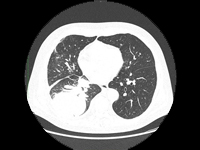
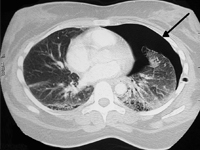
Cystic fibrosis (cystic fibrosis) is the most common genetic disease with autosomal recessive inheritance among the Caucasian population. The incidence varies from country to country. In Poland, it is about 1/2300 of live births. In its course, as a result of mutations on both copies of the CFTR (cystic fibrosis transmembrane conductance regulator) gene, which encodes a chloride channel, ion transport in all exocrine glands is disrupted, leading to dysfunction of key organs for survival, such as the pancreas, liver, lungs and intestines [1].Respiratory complications are the first cause of premature death in CF patients. Pulmonary manifestations of CF include hemoptysis, pneumothorax, chronic sinusitis and airway inflammation, bronchial dilatation, and respiratory failure, among others. Pneumothorax is the presence of air in the pleural cavity. Risk factors are associated with chronic infection with Burkholderia cepacia and Pseudomonas aeruginosa and the coexistence of other complications such as hemoptysis and pancreatic insufficiency [4]. Significant disease progression (FEV1 30%) [2] also favors the occurrence of this complication. Taking into account the criterion of time, we can distinguish the first case of emphysema, or recurrent emphysema, when the air leak reappears within 7 or more days after the previous episode. If the air leak persists for 5 or more days, we can recognize persistent emphysema (Shidlow 1993). Therapy can be divided into medical (oxygen therapy and observation) or surgical interventions. The latter group, which includes drainage, pleurodesis and pleurectomy depending on the course of treatment, is considered a more effective therapeutic option for patients with emphysema without significant concomitant lung disease. However, in CF-affected patients, it may complicate the lung transplant procedure in the future. There are no clinical trials available that reliably compare the efficacy and risk of complications of both types of interventions in CF patients [3-4]. An additional complication is that emphysema recurs in 50-90% of these patients, and in almost half of them it also occurs on the opposite side of the chest. Emphysema significantly worsens lung function, and the patient experiences shortness of breath and significant pain. If refractory to treatment, it is an independent indication for lung transplantation.[5]Here we present the case of a 16-year-old female patient with recurrent unilateral pneumothorax, in which, due to the severity of the disease, the diagnosis and therapeutic measures taken were fraught with numerous problems.

Received 28 Feb 2019Published 28 Feb 2019
PM
Palczewski M., Hordowicz M., Antończyk R.28 Feb 2019

Educational Hub

Quizzes, tests, conferences, LEK-endium — clinical education in every format.

Sign in to earn MCR points on every quiz and test you complete.

Sign in →