Skip to content
Peer-Reviewed · Open Access

Clinical Case Reports for the Evidence-Based Era

MedCaseReports.com — formerly PrzypadkiMedyczne.pl. Educationally important, diagnostically and therapeutically challenging cases from clinical practice.

14,161
Registered users
459
Contributing authors
5
MNiSW points
627
Clinical quizzes & tests
e-ISSN 2084-2708p-ISSN 2083-0033Indexed Google Scholar · PBNLicense CC BY-NC-SA 4.0

Case reports portfolio

Peer-reviewed clinical case reports

№ 104SurgeryCase ReportOpen Access
Acquired cystic disease associated renal cell carcinoma -  new entity in classification WHO 2016. Report of two cases detected at an early stage of development.

Acquired cystic disease associated renal cell carcinoma - new entity in classification WHO 2016. Report of two cases detected at an early stage of development.

W 2012 roku The International Society of Urological Pathology (ISUP) zaproponowało wdrożenie do klasyfikacji 5 nowych podtypów raka nerki, w tym raka nerki związanego z nabytą torbielowatością nerek (ang. acquired cystic disease - associated renal cell carcinoma - ACD-RCC). W 2016 roku ACD-RCC został uznany za niezależną jednostkę w Klasyfikacji Nowotworów Układu Moczowego WHO 2016. [1]. Poniższa praca prezentuje typowe cechy ACD-RCC w oparciu o dwa przypadki.

Received 22 Aug 2017Accepted 25 May 2018Published 30 May 2018
GE
Gawełek E., Drozdzowska B.30 May 2018
№ 103Internal MedicineCase ReportOpen Access
Diagnostic problems and therapeutic procedures in the case of neurosyphilis

Diagnostic problems and therapeutic procedures in the case of neurosyphilis

Currently, syphilis is a growing epidemiological problem, as evidenced by the growing number of new infections, also in Poland [1]. A negative phenomenon is the increasing incidence of late-stage Treponema pallidum infections, including syphilis of the central nervous system (CNS) [2]. In advanced stages of syphilis, and especially in neurosyphilis, the risk of permanent complications increases, including tenesmus dorsi, progressive paralysis, stroke, and others [3]. CNS syphilis poses a significant diagnostic challenge because the symptoms of infection can mimic other primary CNS diseases or systemic diseases with secondary CNS involvement. Therefore, it is often called "the great imitator" [4, 5, 6, 7].

Received 14 May 2017Accepted 03 Feb 2018Published 30 Mar 2018
OM
Ornat M., Inglot M., Szetela B.30 Mar 2018
№ 102OtherCase ReportOpen Access
Foreign body of the neck - case report

Foreign body of the neck - case report

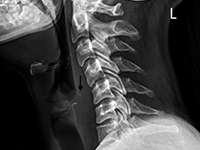
Foreign body ingestion is more common in children than in adults, but serious complications are less common in pediatric patients [1, 2]. Among adults, elderly individuals, those with masticatory disorders, esophageal strictures, prisoners, and patients with mental disorders predominate [2-4]. 80-90% of swallowed foreign bodies pass through the upper gastrointestinal tract spontaneously, but 10-20% require endoscopic removal, and 1% cause complications [3,5]. Possible locations of foreign bodies in the midpharynx include the epiglottis, the base of the tongue, the palatine tonsils, and in the hypopharynx, the piriform recesses, the retrocricoid region, and the posterior pharyngeal wall [6, 7]. In the esophagus, foreign bodies are located in the cervical part in over 80% of cases [1, 2, 8]. It is rare for a swallowed foreign body to penetrate the gastrointestinal tract and migrate deep into the soft tissues. This may be facilitated by the foreign body's structure, e.g., sharp-edged pieces of bone or glass. This poses a risk of serious and potentially fatal complications, such as retropharyngeal abscess, mediastinitis, or damage to the large vessels of the neck [7]. In such cases, prompt intervention and removal of the foreign body are essential. We present the case of a patient with a foreign body that migrated from the hypopharynx into the soft tissues of the neck, directly adjacent to the common carotid artery.

Received 09 Aug 2017Accepted 02 Nov 2017Published 25 Nov 2017
ZM
Zając M., Frączek M., Kręcicki T.25 Nov 2017
№ 101SurgeryCase ReportOpen Access
The recurrence of an originally undiagnosed polymyalgia rheumatica (PMR) 6 years after its first symptoms occurrence

The recurrence of an originally undiagnosed polymyalgia rheumatica (PMR) 6 years after its first symptoms occurrence

Polymyalgia rheumatica (PMR) is one of the most common rheumatic diseases diagnosed in people over 50 years of age. Its incidence increases with age, reaching a peak at 72-73 years of age (PMR is rarely diagnosed in the 50-year-old population) [1]. Statistically, it affects women twice as often. A greater predisposition is also observed in the white race [2]. In Europe, the incidence is on average 1 in 133 people over 50 years of age [3]. There is also a clear geographical variation – the vast majority of diagnoses occur in Northern European countries, particularly Sweden, while in Southern Europe, for example, in Italy, it is much less frequently diagnosed. The etiology of the disease has not been fully elucidated. It is assumed that autoimmune processes underlie it. The role of solar radiation and viral infections has also been suggested [2]. Typical symptoms of polymyalgia include pain and stiffness in the neck, shoulder girdle, and hip muscles [1,2]. PMR belongs to a group of inflammatory diseases with an immune basis. Its etiology also includes a genetic predisposition, including the involvement of antigens: HLA-DR4, HLADRB1*04, and proinflammatory cytokines: TNFα and IL6. Some studies have also demonstrated reduced secretion of adrenal cortex hormones (cortisol, dehydroepiandrosterone) in individuals affected by this condition [4]. The variety of factors postulated to play a significant role in the development of PMR indicates the need for further research into the etiology of this disease.

Received 19 Nov 2016Accepted 24 Sept 2017Published 11 Oct 2017
WD
Wojtczak D., Dębicka K.11 Oct 2017
№ 100OtherCase ReportOpen Access
Abstracts - ESPES (European Society of Paediatric Endoscopic Surgeons) 7th Annual Congress

Abstracts - ESPES (European Society of Paediatric Endoscopic Surgeons) 7th Annual Congress

It is my great pleasure to present a special edition of our Journal, printed for the occasion of the 7th Annual Congress of the European Society of Paediatric Endoscopic Surgeons (ESPES)! In this issue you can find regular case reports submitted to the Journal and all abstracts of ESPES 2017 Congress (September 27th — 29th Wroclaw, Poland). Professor Dariusz Patkowski, a member of our Scientific Council, is the Congress Chairman. All abstracts will be also available after Congress on the journal’s website — www.MDcase.net.

Received 10 Oct 2017Published 10 Oct 2017
P7
Participants 7.10 Oct 2017

Educational Hub

Quizzes, tests, conferences, LEK-endium — clinical education in every format.

Sign in to earn MCR points on every quiz and test you complete.

Sign in →