Skip to content
Peer-Reviewed · Open Access

Clinical Case Reports for the Evidence-Based Era

MedCaseReports.com — formerly PrzypadkiMedyczne.pl. Educationally important, diagnostically and therapeutically challenging cases from clinical practice.

14,161
Registered users
459
Contributing authors
5
MNiSW points
627
Clinical quizzes & tests
e-ISSN 2084-2708p-ISSN 2083-0033Indexed Google Scholar · PBNLicense CC BY-NC-SA 4.0

Case reports portfolio

Peer-reviewed clinical case reports

№ 29GynecologyCase ReportOpen AccessFast review
Preliminary genetic investigation of the patient with atypical long (55 years) malignant melanoma process

Preliminary genetic investigation of the patient with atypical long (55 years) malignant melanoma process

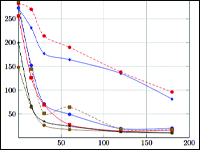
Malignant melanoma of the skin usually has a dramatic course and the prognosis is usually not successful. For this reason, the case of a patient with a 55-year survival after being diagnosed with the said cancer cancer is a relatively unusual event. In an attempt to explain this case, we used a comet assay on the patient's peripheral lymphocytes in between surgical procedures, with γ-ray irradiation of the cells at a dose of 2Gy, compared to two other melanoma patients and four healthy subjects. In both of these comparative melanoma patients, we found increased relative to healthy subjects healthy individuals baseline DNA damage combined with reduced damage repair capacity. The patient, described in this paper, admittedly showed greater radiation damage to genetic material than control patients and healthy subjects, but the kinetics of DNA break repair DNA after a 180-minute incubation was significantly higher in him. Consistent with the hypothesis of a relationship between polymorphisms of cytochrome P-450 genes, encoding detoxification enzymes, with susceptibility to melanoma, we genotyped CYP2D6 (*3,*4), CYP2C9 (*2, *3), CYP2C19 (*2) using the TaqMan technique, showing that with the exception of CYP2C9*2, all other genotyped loci were heterozygous.
Received 14 Sept 2012Accepted 26 Sept 2012Published 10 Oct 2012
RJ
Rogoliński J., Dobrut M., Jaremko M.10 Oct 2012
№ 28OtherCase ReportOpen AccessFast review
Staphylococcal sepsis as a state of imminent threat to life in children - case report

Staphylococcal sepsis as a state of imminent threat to life in children - case report

Advances in medicine, especially the use of invasive techniques for diagnosis and treatment, have increased the risk of developing sepsis. Sepsis (Gr. sepsis - decay) in Polish also referred to as septicemia is a generalized inflammatory response syndrome (SIRS) to infection, an episode involving invasion by pathogenic microorganisms such as bacteria, viruses, fungi and others, which triggers a defensive response. SIRS (systemic inflammatory response syndrome) is diagnosed on the basis of two or more of a group of clinical symptoms, changes in hemodynamic, hematological and biochemical parameters, and signs of inflammation: fever - temperature 38oC or in severe cases hypothermia 36oC, tachycardia - heart rate 90/min, tachypnoe - respiratory rate 20/min, arterial blood oxygen partial pressure 32 mmHg, leukocytosis - 12,000 or leukopenia 4,000 cells/ml or 10% immature forms. Septicemia in newborns is most often caused by Escherichia coli and group B streptococcus.

Received 28 Aug 2012Accepted 29 Aug 2012Published 28 Sept 2012
FA
Fuchs A., Fuchs J.28 Sept 2012
№ 27SurgeryCase ReportOpen AccessFast review
Gaucher's disease - diagnostic challenges and efficacy assessment of Enzyme Replacement Therapy. Report of 4 cases

Gaucher's disease - diagnostic challenges and efficacy assessment of Enzyme Replacement Therapy. Report of 4 cases

Gaucher disease is a rare metabolic disease caused by a genetically determined deficiency or lack of lysosomal β-glucocerebrosidase activity. The following occurs glucocerebrosidase storage, with clinical consequences. Based on the history of of four patients with Gaucher disease and the current state of knowledge, we considered the problem of diagnosis and we evaluated the effectiveness of standard therapy

Received 25 Aug 2012Accepted 29 Aug 2012Published 23 Sept 2012
WK
Wiślińska K., Świder G., Jędrzejek M.23 Sept 2012
№ 26SurgeryCase ReportOpen AccessFast review
Takotsubo cardiomyopathy - an unusual case of an elderly patient

Takotsubo cardiomyopathy - an unusual case of an elderly patient

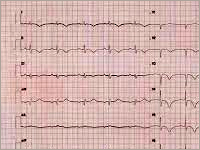
Tako-tsubo cardiomyopathy, otherwise known as ballooning apical syndrome, is preceded by most often by tremendous psychological or physical stress. With its clinical picture, as in the case described, it usually mimics acute coronary syndrome. Of decisive importance is urgently performed angiography of the coronary arteries, in which there are no lesions. In addition, the disease can be confirmed by imaging studies (echocardiography, magnetic resonance imaging of the heart with contrast), which usually show akinesis of the apical and middle segments of the left ventricle and reduced ejection fraction. Very important for the course of the disease is its early diagnosis, because despite rapid improvement after combined treatment with β-blockers and angiotensin-converting enzyme inhibitors and rest, life-threatening complications can occur in the early stages of the disease. The patient is at risk for pulmonary edema, cardiogenic shock, and the development of life-threatening arrhythmias. We present the case of a 72-year-old patient who was diagnosed with tako-tsubo cardiomyopathy, despite the initial diagnosis of acute coronary syndrome. She was at risk for pulmonary edema, but such a complication did not occur. It is very important, that when diagnosing acute coronary syndrome, other possible causes of chest pain, this significantly facilitates the diagnosis and treatment of

Received 09 Jul 2012Accepted 10 Jul 2012Published 14 Sept 2012
KA
Kaczor A., Dźwiarek K.14 Sept 2012
№ 25OtherCase ReportOpen AccessFast review
A ten-year-old girl with fever, "urticaria multiforme", and painful joint swelling - case report

A ten-year-old girl with fever, "urticaria multiforme", and painful joint swelling - case report

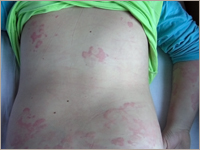
We present the case of a 10-year-old girl who was admitted to the Department of Pediatrics, Preventive Cardiology and Immunology of the Developmental Age at the Medical University of Lodz with symptoms of a post-surgical disease-type reaction - with fever, generalized, multiform urticaria, facial edema and arthritis. From the history obtained from the mother indicated that the above symptoms appeared two days ago, a few hours after the the moment the girl played with a leaf of chefflera, the so-called umbrella tree, Schefflera actinophylla. Interestingly, the reaction was accompanied by significantly elevated levels of IgE total. This exotic potted plant, popular in Poland, from the araliacae family (Araliacae), contains falcarinol, a chemical compound responsible for rare cases of allergy inhalation and contact allergies in gardeners or florist workers, among others. So far, no described reaction of the type of septicaemic disease due to contact with this plant.

Received 31 Jul 2012Accepted 07 Aug 2012Published 12 Sept 2012
HA
Hogendorf A., Cywińska–Bernas A., Zeman K.12 Sept 2012

Educational Hub

Quizzes, tests, conferences, LEK-endium — clinical education in every format.

Sign in to earn MCR points on every quiz and test you complete.

Sign in →