Publications
Peer-reviewed clinical case reports
Wybrane odrębności w żywieniu dzieci w trakcie leczenia onkologicznego. Cykl: Leczenie żywieniowe — ab ovo.
Selected differences in nutrition of children during oncological treatment. Nutrition therapy - editorial cycle.
OtherOncological treatment is associated with a high risk of malnutrition in children. Complications of treatment often prevent oral intake of food, which requires proper dietary modification and consideration of parenteral nutrition.
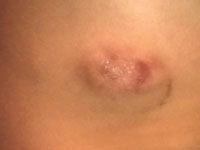
Maska skórna anaplastycznego chłoniaka wielkokomórkowego
Anaplastic large cell lymphoma hidden by skin lesion
OtherNon-Hodgkin's lymphomas are a group of diseases caused by neoplastic transformation of lymphoid cells. Anaplastic large cell lymphoma (<i>Anaplastic large cell lymphoma; </i><i>ALCL)</i>ALK+ (<i>anaplastic lymphoma kinase (ALK)-positive ALK+)</i>. is a neoplasm that originates from T lymphocytes. ALK is a tyrosine kinase receptor with an as yet undiscovered ligand so-called "orphan" (<i>orphan receptor</i>). Activation of of abnormal transmission is caused by a translocation involving the 2p23 region. ALK activation is thought to activates the STAT3, AKT/PI3K, RAS/ERK pathways responsible for cell proliferation and the cell cycle. The occurrence of ALCL ALK+ is relatively rare. It occurs in 3% of adult non-Hodgkin's lymphoma patients and in 10-15% of pediatric lymphoma patients. ALCL ALK+ is an aggressive lymphoma. It is mostly found in younger people (median age 34 years). It is more common in men than in women. The disease mainly occupies lymph nodes, but 60% of patients also have extranodal manifestations. The ALCL ALK+ staging classification uses the Ann Arbor classifications are used. Within 5 years of treatment, 60% of patients remain free of disease recurrence. [1]
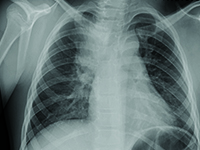
Wrodzona wada układu oddechowego wykryta u 9-letniej dziewczynki z zapaleniem płuc
9 years old girl with pneumonia and congenital defect of pulmonary truct
OtherDefects Congenital defects are abnormalities of the structure of organs created before birth, which lead to dysfunction of these organs. It is estimated that the formation of birth defects birth defects are influenced by: toxic-environmental factors (in 5-10%) and genetic factors (in 20-25%), but in 70-80% no cause can be determined. The incidence of all congenital malformations of congenital malformations in newborns and infants is about 4%, less than 4% of them (about 3.9%) involve the respiratory system. Nearly half of children with congenital defects of the respiratory system die before the age of five. Symptoms of defects in the respiratory system of the respiratory system include chronic or recurrent respiratory infections, symptoms of respiratory failure, coughing, and hemoptysis. Sometimes a defect in the respiratory system of the respiratory system is asymptomatic and detected accidentally.
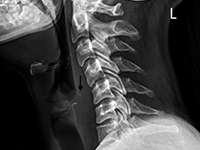
Ciało obce tkanek miękkich szyi - opis przypadku
Foreign body of the neck - case report
OtherForeign body ingestion is more common in children than in adults, but serious complications are less common in pediatric patients [1, 2]. Among adults, elderly individuals, those with masticatory disorders, esophageal strictures, prisoners, and patients with mental disorders predominate [2-4]. 80-90% of swallowed foreign bodies pass through the upper gastrointestinal tract spontaneously, but 10-20% require endoscopic removal, and 1% cause complications [3,5]. Possible locations of foreign bodies in the midpharynx include the epiglottis, the base of the tongue, the palatine tonsils, and in the hypopharynx, the piriform recesses, the retrocricoid region, and the posterior pharyngeal wall [6, 7]. In the esophagus, foreign bodies are located in the cervical part in over 80% of cases [1, 2, 8]. It is rare for a swallowed foreign body to penetrate the gastrointestinal tract and migrate deep into the soft tissues. This may be facilitated by the foreign body's structure, e.g., sharp-edged pieces of bone or glass. This poses a risk of serious and potentially fatal complications, such as retropharyngeal abscess, mediastinitis, or damage to the large vessels of the neck [7]. In such cases, prompt intervention and removal of the foreign body are essential. We present the case of a patient with a foreign body that migrated from the hypopharynx into the soft tissues of the neck, directly adjacent to the common carotid artery.

Abstrakty - 7 Kongres Europejskiego Stowarzyszenia Dziecięcych Chirurgów Endoskopowych
Abstracts - ESPES (European Society of Paediatric Endoscopic Surgeons) 7th Annual Congress
OtherIt is my great pleasure to present a special edition of our Journal, printed for the occasion of the 7th Annual Congress of the European Society of Paediatric Endoscopic Surgeons (ESPES)! In this issue you can find regular case reports submitted to the Journal and all abstracts of ESPES 2017 Congress (September 27th — 29th Wroclaw, Poland). Professor Dariusz Patkowski, a member of our Scientific Council, is the Congress Chairman. All abstracts will be also available after Congress on the journal’s website — www.MDcase.net.
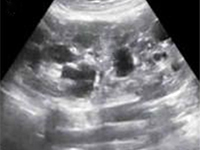
Zespół móżdżkowo-pozapiramidowy jako nietypowa manifestacja zespołu Gitelmana u rodzeństwa
Cerebellar-extrapyramidal syndrome as unusual manifestation of Gitelman syndrome in siblings
OtherIt’s a case presentaƟon of two siblings: a 17-year-old girl and her 15-year-old brother who both developed speech and swallowing difficulƟes, shaking hands and decreased muscle tone at the age of 4. Results of laboratory tests only indicated a tendency to low potassium and magnesium serum concentraƟons. The siblings were diagnosed for cerebellar-extrapyramidal syndrome. AŌer several years of follow-up the paƟent were referred to the Pediatric Nephrology Hospital because of hyperechogenic reflecƟons from renal parenchyma in abdominal ultrasound. Finally, tubulopathy was diagnosed. Diet supplements was included as a result of a persistent electrolyte imbalance, with a posiƟve therapeuƟc effect.
Aspekty zdrowotne kryzysu uchodźczego — opisy przypadków
Health aspects of the refugee crisis — case reports
OtherIn recent years, the number of refugees and illegal immigrants reaching Europe from the many regions affected by warfare, humanitarian disasters, and epidemics. Along with the changing directions from which refugees are arriving, the potential epidemiological risks are also changing and new health challenges arise at the ED level as well as in the context of population health. A particularly dangerous trend can be seen in the potential reduction in travel time from an endemic country to Europe, of people who are healthy carriers of potentially infectious diseases, which allows the development of the full-blown forms of particular entities only in destination countries, where people working in the in the health sector do not have adequate training to deal with diseases that are new to their territory with diseases. The presentation presents two case reports with similar symptomatology but completely different etiology and management using P.falciparum malaria and Ebola hemorrhagic fever as examples.

Chory z ciężkim niedożywieniem przed zastosowaniem obciążającego leczenia
Patients with severe malnutrition before aggressive medical treatment
OtherPatients with severe malnutrition make up a relatively small percentage of those qualified for surgery. Often the underlying pathology involves the gastrointestinal tract and is neoplastic in nature. Preparing patient for aggressive surgical and then oncologic treatment prior to surgery is particularly complex.

Przygotowanie żywieniowe do operacji z powodu choroby nienowotworowej przed przyjęciem do szpitala
Nutritional support before surgical procedure in non-cancer patients
OtherAmong patients qualified for surgery, especially with gastrointestinal pathology, the percentage of malnourished reaches 60%. Preparation of the patient before surgery should be comprehensive and include optimization of nutritional status.
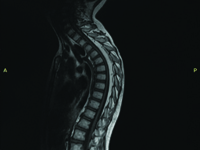
Szybko postępujący zespół ucisku rdzenia kręgowego u dziecka
Rapidly progressing cord compression syndrome in a child
OtherArachnoid calcifications coexisting with epidurally located spinal canal lipoma, are a rare cause of spinal cord compression, especially in children.
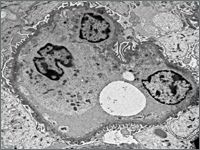
Ostre kłębuszkowe zapalenie nerek u dziewczynki z rodzinnym zespołem Alporta - opis przypadku
Poststreptococcal Glomerulonephritis in a Girl with Familial Alport Syndrome - Case Report
OtherOne of the most common causes of hematuria in children is acute glomerulonephritis. Diseases genetically determined, including Alport syndrome, are among the rarer causes.
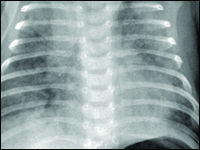
Posocznica gronkowcowa jako stan bezpośredniego zagrożenia życia u dzieci - opis przypadku
Staphylococcal sepsis as a state of imminent threat to life in children - case report
OtherAdvances in medicine, especially the use of invasive techniques for diagnosis and treatment, have increased the risk of developing sepsis. Sepsis (Gr. sepsis - decay) in Polish also referred to as septicemia is a generalized inflammatory response syndrome (SIRS) to infection, an episode involving invasion by pathogenic microorganisms such as bacteria, viruses, fungi and others, which triggers a defensive response. SIRS (systemic inflammatory response syndrome) is diagnosed on the basis of two or more of a group of clinical symptoms, changes in hemodynamic, hematological and biochemical parameters, and signs of inflammation: fever - temperature 38oC or in severe cases hypothermia 36oC, tachycardia - heart rate 90/min, tachypnoe - respiratory rate 20/min, arterial blood oxygen partial pressure 32 mmHg, leukocytosis - 12,000 or leukopenia 4,000 cells/ml or 10% immature forms. Septicemia in newborns is most often caused by Escherichia coli and group B streptococcus.